

How Dubai Police tracked a drug trafficker hiding in airport transit for 45 days
Intelligence-led operation stopped hidden narcotics from reaching buyers
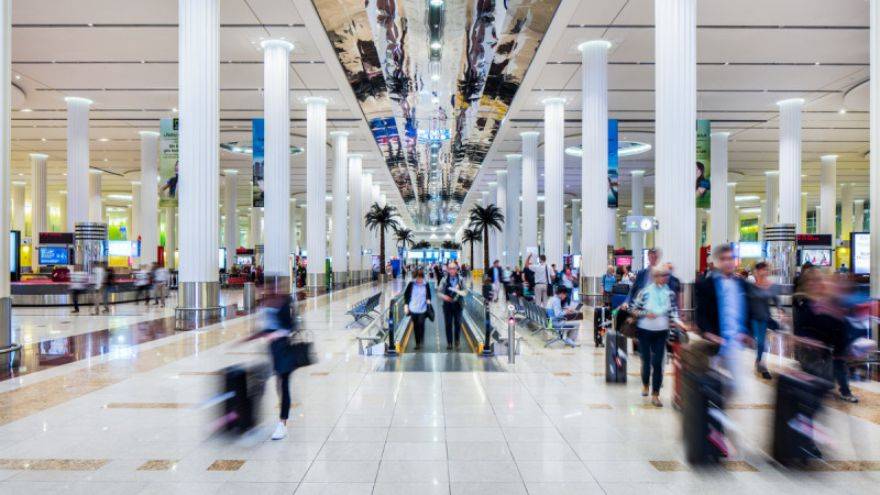
DUBAI – A senior Dubai Police official has revealed how anti-narcotics officers tracked and arrested a suspected drug trafficker who remained inside Dubai International Airport's transit area for 45 days while allegedly coordinating the distribution of hidden narcotics inside the emirate.
The operation, disclosed during a recent podcast appearance, highlighted the increasingly sophisticated methods adopted by organised drug networks and the intelligence-led investigations used to dismantle them. Officials said the suspect believed he could avoid arrest because he had not formally entered the UAE, but investigators continued monitoring his movements until sufficient evidence was gathered.
The details were shared by Brigadier Khalid bin Muwaiza, Director of the General Department of Anti-Narcotics at Dubai Police, during the 'Q.N Podcast' on the Arab Cast platform, where he discussed major investigations, trafficking networks and the changing tactics employed by drug smugglers.
Transit operation
According to Brigadier Khalid, Dubai Police received intelligence indicating that the suspect controlled a hidden cache of narcotics stored somewhere in Dubai. Although he remained inside the airport's transit area for 45 days, investigators found that he continued communicating with contacts in several countries and was allegedly directing the distribution of drugs concealed within the emirate.
Anti-narcotics teams closely monitored the suspect's daily routine, movements, contacts and communications throughout the operation. Investigators gradually pieced together evidence confirming that arrangements had been made for the concealed drugs to be collected and supplied to buyers. Once the operation was fully documented, officers moved in and arrested the suspect before the narcotics could reach the intended recipients.
Brigadier Khalid said such investigations rely on multiple intelligence sources, including identifying suspects, examining criminal backgrounds, analysing relationships and mapping connections with wider trafficking networks.
Addiction risks
The anti-narcotics chief also warned that drug addiction can become a pathway into organised drug distribution. He explained that some users eventually require larger quantities of narcotics and increasing amounts of money to sustain their addiction, leading them to become involved in selling drugs.
He recalled a case involving a woman arrested while carrying nearly one kilogramme of narcotics. Initially a drug user, she reportedly asked her supplier for lower prices as her consumption increased. Instead, the supplier recruited her into his distribution network, instructing her to hide narcotics at designated locations while directing buyers to collect them.
Authorities have also dealt with cases involving teenagers aged between 16 and 18 who allegedly ordered cannabis oil through international express delivery services, filled electronic cigarettes with the substance and sold them. Those involved were arrested and referred for legal proceedings, with Brigadier Khalid stressing that although juvenile cases follow specific legal procedures, their involvement in drug promotion remains a serious concern.
Global networks
Brigadier Khalid also disclosed details of a separate investigation that took four years to build against a UAE national described as one of the country's significant drug traffickers. Investigators found that the suspect managed an extensive network operating across the UAE, Sudan, Egypt and several African countries while presenting himself as an ordinary individual.
Police said the suspect deliberately avoided committing offences within the UAE, carrying out much of his trafficking activity overseas. Brigadier Khalid personally travelled to Sudan and Egypt as part of the investigation, gathering evidence that linked the suspect to international narcotics operations.
The case relied on years of surveillance, documentation, investigative reports, cooperation with foreign law enforcement agencies and evidence obtained from arrested associates. Rather than depending solely on confessions or telephone records, investigators tracked movements, documented meetings and established links between members of the trafficking network before presenting the case before the Federal Court.
Brigadier Khalid said traffickers continue to modify their smuggling methods to maximise profits while reducing risks. He noted that swallowing drug capsules was once among the most common methods used by couriers, with some capable of concealing almost one kilogramme of narcotics inside their bodies. Investigators are also trained to identify suspicious travel patterns, including passengers carrying very little luggage, booking same-day return flights or displaying unusual behaviour, although such indicators alone are not treated as proof of criminal activity. He added that anti-narcotics teams continue adapting through intelligence, experience and cooperation to prevent drugs from reaching the community.